


Reblogged

tuor/ulmo’s message vs turgon’s response (book of lost tales version)
i am maybe just a sucker for bitchily replying with an unfavourable variation on the original speech. but there is very noticeable repetition and the variations Are interesting insight into how turgon views the valar. and the second criticism (that they hid valinor not to keep out evil, but so they wouldn’t have to hear about it) does actually fit with how manwë specifically acts in book of lost tales!
in that. there is a trend in the bolt version of manwë (who imo is a much more interesting character. weird guy) to try to prevent discord at all costs, regardless of like. fairness or actual resolution. like ‘if there is an argument it is the act of expressing discontent that is bad’ e.g. here
where melko deliberately sows discord among the noldoli, they notice this and don’t like it and plan to complain to the valar, melko anticipates this and complains first, and manwë exiles everyone involved. lmao. (there is iirc also another passage that i remember but can’t find bcs my copy of the book is at home. rip!)

Yes, OP, it's a truly chewy subject. And not to be the asshole that keeps adding this enthralling quote to all these discussions, but also: Thus the Hiding of Valinor came near to countering Morgoth's possessiveness by a rival possessiveness, setting up a private domain of light and bliss against one of darkness and domination: a palace and a pleasaunce (well-fenced) against a fortress and a dungeon. - Notes on Motivations in the Silmarillion, Morgoth's Ring.
dont be sorry! this is interesting and relevant and i am 👁️👁️ i just haven't read morgoth's ring yet. rip.
i think there is also smth interesting going on in the silm + bolt (cant speak beyond that because. i have not read it) wrt gondolin (which is textually an imitation of tirion) as an imitation of the failings of valinor also. specifically the combination of 'you can come to our lovely well-fenced paradise and it is very nice untillllll you want to leave. lol' and the treatment of elves who live outside / are excluded as suspicious/inferior, on racialised lines.
which is part of what makes this speech of turgon's in bolt so crunchy to me. ulmo is telling him (unlike in the silm, where it's more of a warning) to go and fight morgoth in battle to help the enthralled noldoli and. well. the valar are not doing that also. turgon doessssss have a point when he's like. why
#riiiight and like. similar deal with lothlórien where they're kinda like i GUESS we'll let you bring this evil thing into our perfect domain#but you're on thin fuckin ice 🙄#(and in that case as well as with the girdle of melian on which precedent lothlórien builds. there is nonzero a racialized element to it)#gen#property law#<- in the sense that the property law is in part a response to this. idk i'll probably appreciate having it in that tag down the line
Reblogged vampiraptor

I know some of you will love this

that looks awesome. tybalt is a mitsubishi forklift. the real understand
wake up babe new blorbos just dropped
Reblogged lady-of-ithilien

Honestly movie!Boromir is sooo valid for not immediately trusting Aragorn.
Like if I’d been fighting for the safety of my home and my people for most of my life, and I rocked up to Rivendell and some elf said "you need to bow down to this man because of who his great-great-great-recurring grandfather was even though he hasn’t done anything for the people he’s the rightful king of" I’d be pissed off too.

And on top of that, book Boromir has more patience than I could ever hope to have because after he mentions how he and his people are on the front line of the war taking on the brunt of the danger and nearly overwhelmed without aid, Aragorn’s response isn’t “oh damn I should’ve been there to help you and your people,” it’s “um actually I’m sacrificing soooo much as a ranger facing objectively lesser evils on the other side of the map and it’s even more thankless than your situation, so how dare you complain”

And after talking about how thankless and hard it is, Book Aragorn later goes on to tell Eowyn that she should LOVE valor without renown.
I don’t have the book with me, but isn’t there also a part of The Council of Elrond where people start talking about the waning strength of Gondor? AFTER Boromir described how his people were dying and no aid was coming? And all Boromir says in response is something like, “Even the end of its strength is still very strong”?
I know he gets angry outside Moria and throws a stone in the water, but Boromir has more patience than he gets credit for. I would have thrown that stone directly at a face by that point.
You know I’d never connected Aragorn’s “strength without valor” speech to Eowyn with his whining about his own lack of recognition at the council, and now I’m pissed anew at this man.
At least the movies have the advantage of 1. having Viggo Mortensen who’s so charming and charismatic that I can overlook a lot of those problems and 2. cutting short some of his scenes including the council argument with Boromir and changing the details of his conversation with Eowyn where she’s literally on her knees begging him to let her join him to the paths of the dead and he just brushes her off and leaves (because I literally can’t get through that part of the book without screaming)
#now i will say aragorn's entirely undercover work in gondor as thorongil gets him some points for me in this conversation.#however i feel like it's also an overcompensation in the wrong direction? bro just say Yeah I Worked For Your Grandfather For A While#instead you choose to be cryptic and come across as completely dismissive for... what reason???? unclear#sinome maruvan ar hildinyar
Reblogged veliseraptor
I’m getting back into Andy Serkis’s audiobook of Lord of the Ring and the fellowship just reached Lothlorien.
Celeborn sees Aragorn and says, “Eight and thirty years have passed in the outside world since last you were here, and the years lie heavily upon you.”
Imagine losing Gandalf, getting out of Moria, escaping the orcs, and finding safety just for your fiancé’s family to be like, “You’re aging TERRIBLY.”
Reblogged

i am glad people are finding solace in richard siken's redefinition of love as a purely mutual emotion or state of being, but at the same time it's driving me up a wall for the simple fact that it is a redefinition & people are treating it as an uncovered "true" definition. "love" describes a whole range of emotions, many of them negative; this no true scotsman version of love is a different concept entirely, both from how the more generically expressed "love" is experienced and from what "love" as a term has meant colloquially & i'm honestly not sure who or what it serves to narrow the definition in this way. to engage in a little bit of reductio ad absurdum, it's like someone who's only had a mcdonalds cheeseburger said "cheeseburgers are all gross" and the answer was "that's because you haven't had a real cheeseburger"
#this was ALL OVER TUMBLR back in late 2023/early 2024 and it pretty much permanently put me off siken as a poet and a person#it pissed me off so bad. you sound like the sort of person who used to get really annoying about the use/misuse of the word 'literally.'#nobody likes that person! shut up! it was love! it is love! fuck you!!#also. applying 'love' only to 'requited attraction' is not the recipe for avoiding disappointment you want to pretend it is#the first person i fell in love with didn't feel the same. the second one did. guess which one i still say 'i love you' to#and which one i haven't talked to in five years :)#idk something about the specific combo of the patronizing tone and the faux-profound framing and the complete incorrectness of the take#just makes me so mad i could spit. couldn't have made me madder if he'd tried with both hands for a fortnight!!#anyway. 52 months and 1 day and it's still love <3 go fuck yourself mr siken <3#inland
Reblogged buttered-milky

Hey man why’s everyone in Ost-in-Edhil swooning
lmaooo that's just my organizational tag for feanorian stuff! i got into silm tumblr via watching packs of nerds picking apart who had the rights to the silmarils and it's been my feanorians tag ever since
Reblogged maenefa

Vassal Homage for Fealtyperverts; Introductory Excerpts from M. Bloch
Imagine two men face to face; one wishing to serve, the other willing or anxious to be served. The former puts his hands together and places them, just joined, between the hands of the other man—a plain symbol of submission, the significance of which was sometimes further emphasized by a kneeling posture. At the same time, the person proffering his hands utters a few words—a very short declaration—whereby he acknowledges himself to be the "man" of the person facing him. Then chief and subordinate kiss each other on the mouth, symbolising accord and friendship.
[...]
the subordinate was often simply called the "man" of his lord; or sometimes, more precisely, his "man of mouth and hands" (homme de bouche et de mains).
[...]
The tie thus formed lasted, in theory, as long as the two lives which it bound together.
[...]
The social bond seemed to be truly inseparable from the almost physical contact which the formal act created between the two men.
[...]
To seek a protector, or to find satisfaction in being one—these things are common to all ages.
[...]
in Merovingian Gaul, as at Rome, one continued to day of the chief that he "took charge" (suscipere) of the subordinate whose "patron" he thereby became; and of the subordinate that he "commended" himself—that is to say "entrusted" himself—to his protector. The obligations thus accepted were generally called "service" (servitium).
[...]
the young man of a good family who wished to get on in the world "entrusted" himself to a powerful man—if his future had not already in his childhood been assured in this way by a far-sighted father.
From 'Chapter XI, Vassal Homage,' in Feudal Society, by Marc Bloch (Société Féodale, Bloch 1939) trans. L.A. Manyon 1964, pp. 156-160 Routledge digital edition.
The relationships of personal dependence had made their entry into history as a sort of substitute for, or compliment to, the solidarity of the family.
[...]
[The exchange of members of the vassal's household with that of the lord] enabled each generation of vassals to enjoy anew something of that participation in the overlord's intimate domestic life whence early vassalage had derived its deepest human value.
[...]
In a society where the individual was so little his own master, marriage (which, as we already know, was bound up with a great variety of interests) was very far from being considered an act of personal choice. This decision was first and foremost a matter for the father.
[...]
Whatever the inequalities between the obligations of the respective parties, those obligations were none the less mutual: the obedience of the vassal was conditional upon the scrupulous fulfilment of his engagements by the lord.
[...]
[The French form of homage] by the gesture of hands closing upon hands and by the kiss on the mouth, made the lord no mere master with the sole function of receiving whatever was due to him, but a partner in a genuine contract. "As much", writes Beaumanoir, "as the vassal owes his lord of fealty and loyalty by reason of his homage, so much the lord owes his vassal."
From 'Chapter XVI, Vassal and Lord', in ibid, pp. 234-8.
[Vassalage] is extolled as the most cherished of bonds. A common synonym for "vassal" was "friend" (ami), and commoner still was the old word dru (probably of Celtic origin) which had almost the same meaning, but with a more definite suggestion of choice; for if it was sometimes applied to amorous relationships, it seems never (unlike ami) to have been extended to those of the family.
[...]
Needless to say, as affection flows upward from the vassal to the lord, so it descends from the lord to the vassal.
[...]
And how can we ignore the evidence of the following lines from the Doon de Mayence which express with such frank simplicity that true union of hearts in which life is inconceivable for one without the other?
[...]
If my dear lord is slain, his fate I'll share. If he is hanged, then hang me by his side. If to the stake he goes, with him I'll burn; And if he's drowned, then let me drown with him.
[...]
"I will love what thou lovest: I will hate what thou hatest,” so ran the Anglo-Saxon oath of commendation. For the continent we have other texts: “Thy friends will be my friends, thy enemies my enemies.” The first and obvious duty of the good vassal is to know how to die for his chief, sword in hand—a fate to be envied above all others
[...]
This bond was felt to be so strong that the idea of it dominated all other human ties.
[...]
When the Provençal poets invented courtly love, the devotion of the vassal to his lord was the model on which they based their conception of the fealty of the perfect lover. This fitted the fact that the lover was often of lower social rank than the lady of his dreams. The assimilation was carried so far that by a strange turn of speech, the name or surname of the beloved was apt to be assigned to the masculine gender, as is appropriate to the name of a chief. Bel Senhor, “my beautiful lord”—one of the ladies to whom Bertrand de Born pledged his fickle heart is known to us only by this pseudonym. Occasionally a knight would have engraved on his shield the clasped hands of his Dulcinea with his own between them. Moreover, does not the memory of this symbolism, so typically feudal in its tenderness—a symbolism which doubtless owed its resuscitation in the early days of the romantic revival to antiquarian interests—still survive in our own day in the rules of politeness which, in French, enjoin a virtually one- sided use of the sadly- faded word hommages?
From 'Chapter XVII, The Paradox of Vassalage' in ibid, pp. 241-3.
In particular the humble attitude of the lover was a new thing. We have seen that it was apt to express itself in terms borrowed from the vocabulary of vassal homage; and this was not merely a matter of words. The identification of the loved one and the lord corresponded to an aspect of social morality entirely characteristic of feudal society.
From 'Chapter XXII, The Life of the Nobility', in ibid, p. 325.
Compiled for fun and so you all can examine the precise origins of what is wrong with me when it comes to reading a homoerotic, quasi-marital element into fealty-bonds. Further posts may follow with extracts from Bloch on the thornier nature of power, youth, and manhood as aspects of the feudal bond, or from David Clark in Between Medieval Men for a more current view on homosociality and homoeroticism in the Middle Ages.
Reblogged elucubrare

And Death Shall Have No Dominion
by Dylan Thomas
And death shall have no dominion. Dead men naked they shall be one With the man in the wind and the west moon; When their bones are picked clean and the clean bones gone, They shall have stars at elbow and foot; Though they go mad they shall be sane, Though they sink through the sea they shall rise again; Though lovers be lost love shall not; And death shall have no dominion.
And death shall have no dominion. Under the windings of the sea They lying long shall not die windily; Twisting on racks when sinews give way, Strapped to a wheel, yet they shall not break; Faith in their hands shall snap in two, And the unicorn evils run them through; Split all ends up they shan’t crack; And death shall have no dominion.
And death shall have no dominion. No more may gulls cry at their ears Or waves break loud on the seashores; Where blew a flower may a flower no more Lift its head to the blows of the rain; Though they be mad and dead as nails, Heads of the characters hammer through daisies; Break in the sun till the sun breaks down, And death shall have no dominion.
Reblogged catilinas
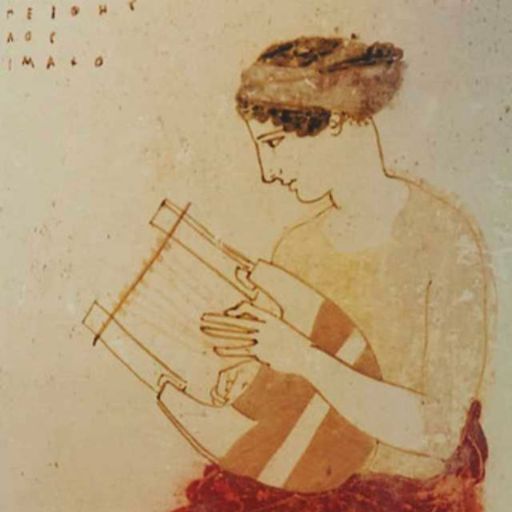
they hate me for my classical pronunciation of christmas carol latin
Reblogged swords-n-spindles

Kind of obsessed with this woman's freakishly modern jacket from 1904.
The complete lack of shoulder definition gives it the silhouette of an MA-1 bomber jacket, but bombers weren't even a thing yet. The Wright brothers barely achieved powered flight in 1903. The ribbing on the shoulder and the angular cutouts with the hexagonal mesh are so futuristic and cyberpunk, but even art deco wouldn't be a thing for another 15 years. The color is like a dusty NASA flight suit. All together it's giving lone spacefarer crash landing their tiny rustbucket ship on Mars.
Truly a visionary of her time.
Reblogged vampiraptor

tbh if i was really into a het relationship with a fun unique dynamic and i logged online to tumblr and saw that the fans were going "alright we have 4 flavors of misogyny available to portray women with so we're gonna pick one" id become the joker. hetjoshis im so sorry you have to deal with fanon
Reblogged eomer

Imants Tillers (Australia, 1950 - ) Kangaroo Blank, 1988 oilstick, gouache, synthetic polymer paint 78 canvas boards, nos. 16231 - 16308 installation 213.0 (h) x 195.0 (w) cm
Reblogged vampiraptor
Hey man why’s everyone in Ost-in-Edhil swooning
Reblogged kanalaure

Extremely boring that the fandom perception of Nerdanel is informed by the instances where she, according to the narrative, was more reasonable and mature than Fëanor, because I firmly believe that a) all the Noldor are weirdo freaks in their own way and b) you’d have to match Fëanor’s level of weirdo obsession in some way to be married to him
Reblogged professorsparklepants

[ID: TGCF fanart of Hua Cheng and Xie Lian. First, Hua Cheng looks forward with his right eye closed; overlaid is the glowing gold outline of his saber E'ming, whose eye is positioned directly over his eyelid. Second, Xie Lian looks forward with a somber expression; overlaid is the glowing gold outline of the sword Fangxin cutting his face in half, while the outlines of a cry-smiling mask and his cursed shackle also float over his face and neck. End ID]
Described by @nebulations💕
