
Table of Contents

 5 September 2025
 BMW F20 Engines
The BMW F20 1 Series was launched in 2011 as a revolutionary front-wheel drive model and marked a paradigm shift in BMW's compact class. Over the production period until 2019, the F20 offered an impressive range of engines from economical three-cylinder units to high-performance TwinPower Turbo engines. The technological development reflects BMW's shift from classic naturally aspirated engines to modern turbocharged engines with advanced efficiency.

BMW F20 engines - First generation TwinPower Turbo (2011-2015)
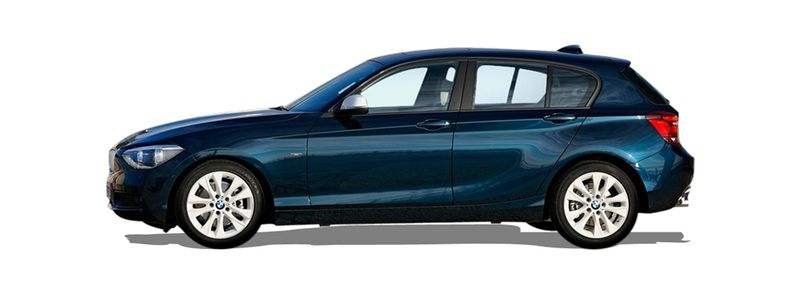
The first generation of BMW F20 engines established new standards in the compact class and brought the proven TwinPower Turbo technology to the front-wheel drive segment for the first time. Typical mileages of 250,000 to 300,000 kilometers are realistic with proper maintenance, with major repairs usually occurring between 150,000 and 200,000 kilometers. The BMW F20 125i with the N20 engine is regarded as the absolute pinnacle of this generation and combines performance with reliability in the best possible way. The introduction of three-cylinder technology was initially controversial, but proved to be groundbreaking for the entire industry. Compared to competitors such as the Audi A3 or Mercedes A-Class, the F20 positioned itself as the sportiest alternative with superior driving dynamics.
BMW F20 TwinPower Turbo petrol engines first generation (2011-2015)
The TwinPower Turbo petrol engines of the first F20 generation comprised a wide range of three- and four-cylinder units. The 114i with 102 hp (engine code F19) was the entry-level model, followed by the 116i with 136 hp (N13 engine). The 118i initially received the N13 engine with 170 hp, later the B38 three-cylinder with 136 hp. At the top of the range were the 125i with 218 hp (N20 engine) and the M135i with 320 hp (N55 unit).
The N20 four-cylinder in the 125i proved to be particularly balanced and durable, while the N13 engine occasionally showed problems with the timing chain between 80,000 and 120,000 kilometers. The N55 engine in the M135i is considered one of the most robust BMW six-cylinder engines, but can develop turbocharger damage around 150,000 kilometers under high loads. The three-cylinder engines of the B38 family impressed with their low fuel consumption, but occasionally showed problems with the engine mounts after 100,000 kilometers.
BMW F20 TwinPower Turbo diesel engines first generation (2011-2015)
The diesel range started with the 116d (116 hp, N47 engine) and 118d (143 hp, also N47). Later, the 120d with 184 hp (N47 engine) and the 125d with 218 hp (N47S1 engine) were added to the range. The N47 engine brought with it the well-known timing chain problem, which typically occurred between 100,000 and 150,000 kilometers and resulted in costly repairs.
The 125d with the N47S1 engine was a notable exception and proved to be significantly more reliable than its weaker siblings. The bi-turbo technology ensured impressive driving performance, while the durability of the turbochargers usually reached over 200,000 kilometers with proper maintenance. However, the DPF systems proved problematic on short journeys, leading to costly regeneration cycles.
| Engine | Power (PS) | Consumption (l/100km) | Typical weaknesses | Rating |
|---|---|---|---|---|
| 114i (F19) | 102 | 5,8 | Low performance, smooth running | Average |
| 116i (N13) | 136 | 6,2 | Timing chain, injectors | Moderate |
| 118i (N13) | 170 | 6,8 | Timing chain, high-pressure pump | Moderate |
| 125i (N20) | 218 | 7,1 | Very reliable | Very good |
| M135i (N55) | 320 | 8,5 | Turbocharger during sports driving | Good |
| 116d (N47) | 116 | 4,5 | Timing chain, DPF | Problematic |
| 118d (N47) | 143 | 4,7 | Timing chain, injectors | Problematic |
| 120d (N47) | 184 | 5,1 | Timing chain, turbocharger | Moderate |
| 125d (N47S1) | 218 | 5,8 | Relatively reliable | Good |
BMW F20 engines - facelift with B engines (2015-2019)

The 2015 facelift brought a fundamental overhaul of the engine range and introduced the new B engine family. This generation achieves mileages of 300,000 to 350,000 kilometers with significantly reduced maintenance requirements. Major repairs are typically postponed to 180,000 to 220,000 kilometers. The BMW F20 118i with B38 engine established itself as the gold standard for reliability and efficiency in this class. The new B engines eliminated many of the teething troubles of their predecessors and offered improved emission values. Compared to the competition, BMW now offered the most modern engine technology in the compact class.
BMW F20 TwinPower Turbo petrol engines facelift (2015-2019)
The revised range of petrol engines was primarily based on the new B engine family. The 118i received the B38 three-cylinder with 136 hp, which proved to be significantly more reliable than its predecessor. The 120i used the B48 four-cylinder with 192 hp, while the M140i received the B58 in-line six-cylinder with 340 hp.
The B38 three-cylinder in the 118i impressed with its smooth running and reliability, with only the engine mounts showing occasional weaknesses after 150,000 kilometers. The B48 engine in the 120i proved to be well-balanced and low-maintenance, while the B58 in the M140i is considered one of the best BMW engines of all time. Problems with the new engines mainly occurred with the high-pressure fuel pumps, mostly between 120,000 and 160,000 kilometers.
BMW F20 TwinPower Turbo diesel engines facelift (2015-2019)
The diesel range was completely overhauled and received the new B47 engine family. The 116d started with 116 hp, the 118d offered 150 hp and the 120d produced 190 hp. All engines were based on the B47 unit and eliminated the timing chain problem of the N47 predecessors.
The B47 engine proved to be much more reliable than its N47 predecessor and offered a timing chain instead of the problematic timing chain. Typical problems were limited to DPF blockages on short journeys and occasional turbocharger defects after 180,000 kilometers. The injectors proved to be more robust than in the predecessors, but can cause problems after 200,000 kilometers if the diesel quality is poor.
| Engine | Power (PS) | Consumption (l/100km) | Typical weaknesses | Rating |
|---|---|---|---|---|
| 118i (B38) | 136 | 5,4 | Engine mounts, very rare | Very good |
| 120i (B48) | 192 | 6,1 | High pressure pump | Good |
| M140i (B58) | 340 | 7,8 | Practically trouble-free | Very good |
| 116d (B47) | 116 | 4,1 | DPF for short distances | Good |
| 118d (B47) | 150 | 4,3 | DPF, turbocharger rarely | Good |
| 120d (B47) | 190 | 4,7 | Turbocharger, injectors | Good |

Conclusion: The best BMW F20 engines of all generations
BMW F20 engine development shows an impressive technological evolution from the initial TwinPower Turbo units to the mature B-engines. While the first generation still struggled with teething problems, the facelift engines established new reliability standards. The three-cylinder technology developed from a controversial innovation to an industry standard.
- Best BMW F20 gasoline engine:
The B58 engine in the M140i with 340 hp combines exceptional performance with remarkable reliability and is considered one of the best BMW in-line six-cylinder engines of all time.
- Best BMW F20 diesel engine:
The B47 engine in the 120d with 190 hp impresses with modern technology without timing chain problems and offers an optimum balance between performance and efficiency.
- Most reliable BMW F20 engine:
The B38 three-cylinder in the 118i with 136 hp sets the standard for long-term quality and low operating costs while providing sufficient power for everyday use.
Spare parts and wear components for all BMW F20 engines are available from AUTODOC in proven quality.


