
Table of Contents

 5 September 2025
 BMW F31 engines
The BMW F31 Touring was introduced in 2012 as an estate version of the 3 Series and quickly established itself as a premium alternative in the mid-size segment. Over its production period from 2012 to 2019, the F31 offered a diverse range of engines from economical diesels to powerful six-cylinder units. The technological development included modern TwinPower Turbo technology and efficient EfficientDynamics measures.

BMW F31 engines (2012-2019)
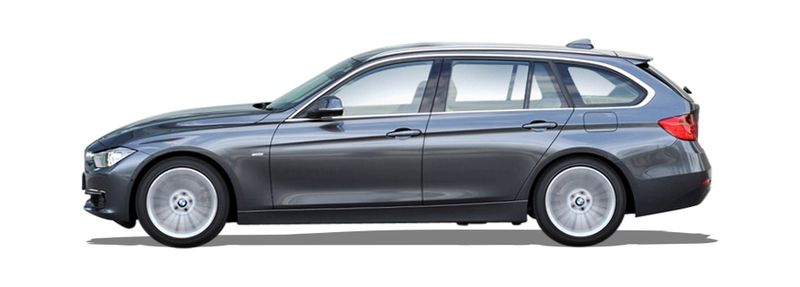
The BMW F31 generation represented BMW's answer to the growing demand for practical premium station wagons and was characterized by a balanced mix of driving dynamics and suitability for everyday use. The mileage of the BMW F31 engines varied considerably depending on maintenance and driving style: While the robust diesel engines easily reached 300,000 to 400,000 kilometers with proper care, some gasoline engines required costly repairs to the timing chain or high-pressure pump between 150,000 and 200,000 kilometers. The absolute top engine of this generation was the 330d with its 3.0-liter inline six-cylinder diesel, which produced 258 hp and optimally combined power, reliability and efficiency. Typical repair intervals for most engines were between 120,000 and 180,000 kilometers for major maintenance work.
BMW F31 petrol engines (2012-2019)
The BMW F31 petrol engine range included a wide selection of TwinPower Turbo engines. The entry-level model was the 316i with a 1.6-liter four-cylinder engine and 136 hp, followed by the 320i with a 2.0-liter engine and 184 hp. The mid-range was represented by the 328i with 245 hp, while the 335i topped the range with its 3.0-liter inline six-cylinder and 306 hp. However, these BMW F31 engines suffered from typical problems of the N20/N26 generation: timing chain wear, defective high-pressure pumps and occasional turbocharger damage made them the most maintenance-intensive engines. The most powerful BMW F31 petrol engine was the 335i with its N55 engine, which was less prone to timing chain problems, but still exhibited occasional injector problems and wastegate defects. From 2015, the 320i was replaced by the revised B48 engine, which was significantly more reliable.
BMW F31 diesel engines (2012-2019)
The BMW F31 diesels were dominated by the proven N47/B47 engine family with various power levels. The 316d started with 116 hp, followed by the 318d with 143 hp and the 320d with 184 hp. The 325d with 218 hp and the aforementioned 330d with 258 hp topped the range. The BMW F31 320d with its N47 engine (later B47) developed into the most reliable engine of the entire series - especially the B47 variants produced from 2014 with optimized common rail injection and improved exhaust gas aftertreatment proved to be very durable and economical. These BMW F31 diesels already met the Euro 6 standard and offered an excellent combination of performance, consumption and reliability. Only the early N47 engine showed occasional problems with the timing chain, but these were avoidable with regular maintenance.
BMW F31 all-wheel drive (2012-2019)
Various BMW F31 engines were also available with xDrive all-wheel drive, including the 320i xDrive, 328i xDrive, 335i xDrive and the diesel 320d xDrive, 325d xDrive and 330d xDrive. These variants offered improved traction, but showed slightly higher fuel consumption and occasional problems with the transfer case at high mileages.
| BMW F31 engine | Power output | Fuel consumption | Typical weaknesses | Rating |
|---|---|---|---|---|
| 316i | 136 HP | 6.4-7.2 l/100km | Timing chain, high pressure pump | Moderate |
| 320i (N20) | 184 HP | 6.8-7.5 l/100km | Timing chain, turbocharger | Problematic |
| 320i (B48) | 184 HP | 6.2-6.9 l/100km | Significantly more reliable | Good |
| 328i | 245 HP | 7.1-7.8 l/100km | Timing chain, high-pressure pump | Moderate |
| 335i | 306 HP | 7.9-8.6 l/100km | Injectors, wastegate | Average |
| 316d | 116 HP | 4.3-4.8 l/100km | Little power, but robust | Good |
| 318d | 143 HP | 4.2-4.7 l/100km | Very reliable | Very good |
| 320d | 184 HP | 4.5-5.2 l/100km | Early N47: timing chain | Very good |
| 325d | 218 HP | 5.1-5.8 l/100km | Robust, good performance | Very good |
| 330d | 258 HP | 5.4-6.1 l/100km | Best engine in the series | Very good |

Conclusion: The best BMW F31 engines
The BMW F31 engines showed a clear dichotomy between the high-maintenance gasoline engines of the early N20 generation and the robust diesel engines. While the BMW F31 diesel engines were consistently convincing, it was only the later B48 petrol engines that developed into reliable alternatives. The all-wheel drive versions offered additional versatility, but required more careful maintenance of the xDrive system.
- Best BMW F31 gasoline engine:
The BMW F31 320i with B48 engine (from 2015) combines modern technology with significantly improved reliability over its N20 predecessor.
- Best BMW F31 diesel engine:
The BMW F31 330d with its 3.0-liter inline six-cylinder offers the best combination of performance, efficiency and durability of all F31 engines.
- Best BMW F31 all-round engine:
The BMW F31 320d proves to be the ideal compromise between economy, reliability and sufficient power for everyday driving.
For maintenance and spare parts for all BMW F31 engines, AUTODOC offers a comprehensive range of original and quality spare parts with fast delivery and expert advice.


