
Table of Contents

 29 September 2025 (updated)
 Citroën C3 engines
Since its market launch in 2002, the Citroën C3 has established itself as a reliable small car and has gone through four generations with a diverse range of engines. The Citroën C3 engines evolved from simple but robust units to modern, efficient powertrains with advanced technology.

Citroën C3 engines: Generation I (2002-2010)

The first Citroën C3 generation was characterized by proven PSA engines, which were characterized by their robustness and ease of maintenance. Typical mileages were between 250,000 and 350,000 kilometers with proper maintenance, with diesel engines often even reaching 400,000 kilometers. Major repairs were usually only required after 200,000 kilometers, mainly on the clutch, timing belt or turbocharger in the diesel variants. The absolute top engine of this generation was the 1.6 HDi with 110 hp, which optimally combined power, reliability and low fuel consumption. The Citroën C3 engines of this era were considered to be particularly durable and inexpensive to maintain, which made the C3 a popular vehicle for frequent drivers.
Citroën C3 petrol engines: Generation I (2002-2010)
The Citroën C3 petrol engine range consisted mainly of atmospheric engines without turbocharging. The entry-level engine was a 1.1-liter unit with 44 kW (60 hp), followed by the popular 1.4-liter engine with 54 kW (73 hp). These Citroën C3 engines proved to be extremely reliable and low-maintenance; only the ignition coils were occasionally prone to failure. The most powerful Citroën C3 petrol engine was the 1.6-liter engine with 80 kW (109 hp), which was available from 2005 and was characterized by its smooth running and durability. All petrol engines had a timing chain instead of a timing belt, which significantly reduced maintenance costs.
Citroën C3 diesel engines: Generation I (2002-2010)
The Citroën C3 diesels were dominated by the tried-and-tested 1.4 HDi with 50 kW (68 hp), which established itself as one of the most reliable small car diesels of its time. From 2004, the more powerful 1.6 HDi with 66 kW (90 hp) was added, later also with 80 kW (109 hp). These Citroën C3 HDi engines had common-rail injection and an optional particulate filter. The 1.6 HDi with 110 hp developed into the best engine of the entire first generation - it offered excellent driving performance with a fuel consumption of just 4.2 liters per 100 kilometers and proved to be extremely durable. Typical weak points were only the glow plugs and occasionally the turbocharger after very high mileages.
| Citroën C3 engine | Power output | Fuel consumption | Typical weaknesses | Rating |
|---|---|---|---|---|
| 1.1 VTi | 60 HP | 6.8 l/100km | Ignition coils, little power | Average |
| 1.4 VTi | 73 HP | 6.5 l/100km | Very robust, hardly any problems | Very good |
| 1.6 VTi | 109 HP | 7.2 l/100km | Robust, good performance | Good |
| 1.4 HDi | 68 HP | 4.5 l/100km | Glow plugs, very economical | Very good |
| 1.6 HDi | 90-110 HP | 4.2-4.8 l/100km | Occasional turbocharger | Very good |
Citroën C3 engines: Generation II (2010-2016)
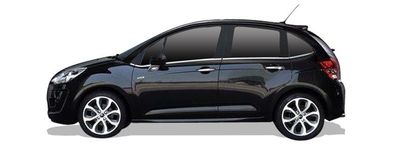
The second Citroën C3 generation brought with it a modernization of the engine range, while retaining the proven reliability. Most engines easily reached 200,000 to 300,000 kilometers, with the new VTi petrol engines being particularly low-maintenance thanks to their chain drives. Major repairs were usually only required after 150,000 to 200,000 kilometers, mainly on the clutch or air conditioning system. The absolute highlight was the 1.6 HDi with 115 hp, which combined state-of-the-art diesel technology with proven reliability. An automatic gearbox was also introduced for the first time, although this was only available with selected engines. The Citroën C3 engines of this generation were characterized by improved efficiency and lower emissions without sacrificing reliability.
Citroën C3 petrol engines: Generation II (2010-2016)
The Citroën C3 petrol engine range was completely revised and now included VTi engines with variable valve timing. The 1.0 VTi with 50 kW (68 hp) served as the entry-level engine, followed by the popular 1.2 VTi with 60 kW (82 hp). These smaller Citroën C3 engines proved to be extremely economical and reliable, with only the valve cover gasket being prone to occasional leaks. The most powerful Citroën C3 petrol engine was still the 1.6 VTi with 88 kW (120 hp), which was characterized by its smooth running and durability. All VTi engines had timing chains and were considered to be particularly low-maintenance, with the 1.2 VTi becoming the most popular engine of this generation.
Citroën C3 diesel engines: Generation II (2010-2016)
The tried-and-tested 1.4 HDi was further developed and now offered 50 kW (68 hp) with improved efficiency. The 1.6 HDi was available in various power levels from 68 kW (92 hp) to 85 kW (115 hp). All Citroën C3 diesels featured modern common-rail injection and a particulate filter as standard. The 1.6 HDi with 115 hp developed into the top engine of this generation and offered outstanding driving performance with a fuel consumption of just 3.8 liters per 100 kilometers. Reliability remained at the same high level as the previous generation, although the more modern injection systems were occasionally more sensitive to poor diesel quality.
| Citroën C3 engine | Power output | Fuel consumption | Typical weaknesses | Rating |
|---|---|---|---|---|
| 1.0 VTi | 68 HP | 5.9 l/100km | Valve cover gasket, little power | Average |
| 1.2 VTi | 82 HP | 5.7 l/100km | Very robust, economical | Very good |
| 1.6 VTi | 120 HP | 6.8 l/100km | Robust, good performance | Good |
| 1.4 HDi | 68 HP | 4.1 l/100km | Particle filter, very economical | Good |
| 1.6 HDi | 92-115 HP | 3.8-4.3 l/100km | Injection with poor diesel | Very good |
Citroën C3 engines: Generation III (2016-2023)

The third Citroën C3 generation marked the transition to more modern turbo technologies and brought with it the first problems unknown in its predecessors. Mileage dropped to between 180,000 and 250,000 kilometers, with the small turbo engines showing more frequent problems with the turbocharger and timing chain. Major repairs were often necessary after just 100,000 to 150,000 kilometers, especially with the PureTech engines. The best engine of this generation was the 1.5 BlueHDi with 100 hp, which combined proven diesel reliability with modern emission standards. The Citroën C3 engines of this generation suffered from the typical problems of modern downsized engines: wet timing belts, turbocharger damage and increased oil consumption were the order of the day. Despite improved efficiency and performance, this generation was significantly more vulnerable than its predecessors.
Citroën C3 petrol engines: Generation III (2016-2023)
The Citroën C3 petrol engine range was completely converted to PureTech turbo engines. The 1.2 PureTech was available in various power levels from 60 kW (82 hp) to 81 kW (110 hp). These Citroën C3 engines used a wet timing belt, which proved to be the weakest point and often led to a total loss after just 80,000 to 120,000 kilometers. The 1.2 PureTech with 110 hp developed into the most problematic engine in the entire history of the C3 - in addition to the timing belt problem, turbocharger damage, oil consumption and timing chain problems frequently occurred. Citroën recognized the problems and carried out several recalls, but was unable to fully restore confidence in the PureTech technology.
Citroën C3 diesel engines: Generation III (2016-2023)
The new 1.5 BlueHDi replaced the proven HDi engines and was available in power levels from 75 kW (102 hp) to 88 kW (120 hp). These Citroën C3 diesels were equipped with SCR catalytic converters with AdBlue injection and state-of-the-art exhaust gas purification. The 1.5 BlueHDi with 100 hp proved to be the most reliable engine of this generation and offered a fuel consumption of just 3.5 liters per 100 kilometers. The BlueHDi engines occasionally had problems with the AdBlue system and the complex exhaust gas purification system, but remained significantly more reliable than the PureTech petrol engines. The timing belt was dry here and did not cause any problems.
| Citroën C3 engine | Power output | Fuel consumption | Typical weaknesses | Rating |
|---|---|---|---|---|
| 1.2 PureTech | 82 HP | 5.8 l/100km | Wet timing belt, turbocharger | Problematic |
| 1.2 PureTech | 110 HP | 6.2 l/100km | Timing belt, timing chain, oil consumption | Problematic |
| 1.5 BlueHDi | 100 HP | 3.5 l/100km | AdBlue system, very economical | Good |
| 1.5 BlueHDi | 120 HP | 3.8 l/100km | AdBlue system, good performance | Good |
Citroën C3 engines: Generation IV (2023-today)
The current Citroën C3 generation relies on a reduced but well thought-out engine range with a focus on electrification. The conventional drive is limited to a revised 1.2 PureTech with 74 kW (100 hp), while a fully electric ë-C3 with 83 kW (113 hp) completes the portfolio. As the generation has only been available since 2023, no long-term experience is yet available, but Citroën has addressed the known problems of the PureTech engines. The revised 1.2 PureTech now uses a dry timing belt and is intended to remedy the reliability problems of the previous generation. Initial tests show promising results, with the aim of achieving a service life of over 200,000 kilometers.
Citroën C3 petrol engines: Generation IV (2023-today)
The only Citroën C3 petrol engine of the current generation is the revised 1.2 PureTech with 74 kW (100 hp). This engine now uses a dry timing belt instead of the problematic wet system and has an improved turbocharger design. The timing chain has been reinforced and oil consumption reduced. Citroën promises significantly improved reliability compared to its predecessors, and initial experience has been positive. The engine offers a fuel consumption of 5.4 liters per 100 kilometers and meets the Euro 6d standard.
Citroën C3 electric drive: Generation IV (2023-today)
The all-electric Citroën ë-C3 has an 83 kW (113 hp) electric motor with a 44 kWh battery and a range of up to 320 kilometers. The drive is low-maintenance and offers smooth power delivery. The battery can be charged with up to 100 kW direct current. As a special feature, Citroën offers battery rental to reduce the purchase costs.
| Citroën C3 engine | Power output | Fuel consumption | Typical weaknesses | Rating |
|---|---|---|---|---|
| 1.2 PureTech | 100 HP | 5.4 l/100km | No long-term experience yet | Good |
| Electric motor | 113 HP | 16.7 kWh/100km | Battery life unknown | Very good |

Conclusion: The best Citroën C3 engines of all generations
The development of the Citroën C3 engines clearly shows the change in the automotive industry: while the first two generations impressed with proven, durable units, the third generation with its modern turbo technologies brought with it considerable reliability problems. The current generation promises a return to higher quality, although long-term experience has yet to be gained.
- Best Citroën C3 gasoline engine:
The 1.2 VTi (82 hp, Generation II) combines excellent reliability with low fuel consumption and low-maintenance technology without a turbocharger.
- Best Citroën C3 diesel engine:
The 1.6 HDi (110 hp, Generation I) offers the best combination of reliability, economy and performance across all generations.
- Best Citroën C3 electric drive:
The electric motor (113 hp, Generation IV) with its low-maintenance technology and high efficiency represents the future of the C3.
For maintenance and spare parts for all Citroën C3 generations, AUTODOC offers a comprehensive range of original and quality spare parts with fast delivery and expert advice.
TOP Products on the topic:


