
Table of Contents

 22 July 2025 (updated)
 VW Polo 6R Water Pump Problems: What Every Owner Should Know
Water pump failures in the VW Polo 6R (2009-2017) have become one of the most documented issues affecting this generation. Whether you drive a TSI petrol or TDI diesel variant, understanding this common problem could save you from unexpected breakdowns and costly repairs. AUTODOC experts recommend proactive monitoring, as these failures can occur much earlier than expected.
Why Do VW Polo 6R Water Pumps Keep Failing?
The root causes behind water pump failures in the Polo 6R stem from fundamental design flaws and environmental factors that affect the cooling system's durability.
Primary Design Issues:
- Plastic housing construction that degrades under constant heat cycling
- Integrated thermostat housing design that creates multiple failure points
- Inadequate seal materials prone to swelling from oil contamination
- Poor bearing assembly quality in some manufacturing revisions
Environmental Factors:
- Heat cycling causes plastic components to expand and contract repeatedly
- Oil leaks from engine seepage contaminate water pump seals
- Incorrect coolant mixture or contaminated cooling systems accelerate wear
- Extended service intervals without proper coolant system maintenance
AUTODOC professionals point out that Volkswagen has released multiple water pump revisions—reportedly eight or more for some engines—yet the fundamental plastic housing design remains problematic across most variants.

Which Polo 6R Models Are Most at Risk?
The water pump issue affects virtually all Polo 6R configurations, but certain variants show higher failure rates and more severe consequences.
| Engine Type | Common Issues | Typical Mileage for Failure |
| 1.2 TSI (CJZC/CJZD) | Thermostat housing leaks, main pump failure | 50,000-70,000 km |
| 1.4 TSI | Integrated housing failures, coolant loss | 60,000-90,000 km |
| 1.6 TDI | EGR cooler interaction, slow leaks | 80,000-130,000 km |
| GTI 1.8 TSI | Thermostat housing, high-pressure failures | 40,000-80,000 km |
The TSI petrol engines face additional complications due to their integrated water pump and thermostat housing design, making repairs more complex and expensive.
Sold by AUTODOC Sold by AUTODOC Sold by AUTODOC Sold by AUTODOC Sold by AUTODOC
-60%
 RIDEX Water pump
without belt pulley, with lid, with water pump seal ring, Mechanical
Article number: 1260W0225
compared to
RRP
£47.50
£18. 99
Price per item
price incl. 20% VAT, excl. delivery costs
-54%
RIDEX Water pump
without belt pulley, with lid, with water pump seal ring, Mechanical
Article number: 1260W0225
compared to
RRP
£47.50
£18. 99
Price per item
price incl. 20% VAT, excl. delivery costs
-54%
 RIDEX Water pump
Plastic, for V-ribbed belt use
Article number: 1260W0458
compared to
RRP
£49.60
£22. 49
Price per item
price incl. 20% VAT, excl. delivery costs
-49%
RIDEX Water pump
Plastic, for V-ribbed belt use
Article number: 1260W0458
compared to
RRP
£49.60
£22. 49
Price per item
price incl. 20% VAT, excl. delivery costs
-49%
 RIDEX Water pump
Number of Teeth: 27, with seal ring, for timing belt drive
Article number: 1260W0036
compared to
RRP
£44.40
£22. 49price incl. 20% VAT, excl. delivery costs
-52%
RIDEX Water pump
Number of Teeth: 27, with seal ring, for timing belt drive
Article number: 1260W0036
compared to
RRP
£44.40
£22. 49price incl. 20% VAT, excl. delivery costs
-52%
 RIDEX Water pump
Number of Teeth: 28, with gasket/seal, Incl. Gasket Set, without lid, Mechanical, Metal, Water Pump Pulley Ø: 43,4 mm, for V-ribbed belt use, for timing belt drive
Article number: 1260W0355
compared to
RRP
£74.50
£35. 49price incl. 20% VAT, excl. delivery costs
-45%
RIDEX Water pump
Number of Teeth: 28, with gasket/seal, Incl. Gasket Set, without lid, Mechanical, Metal, Water Pump Pulley Ø: 43,4 mm, for V-ribbed belt use, for timing belt drive
Article number: 1260W0355
compared to
RRP
£74.50
£35. 49price incl. 20% VAT, excl. delivery costs
-45%
 RIDEX Water pump
with coolant regulator, with bore for sensor, Thermostat fitted in water pump, Mechanical, Synthetic Material Housing, for timing belt drive
Article number: 1260W0389
compared to
RRP
£171.00
£92. 49price incl. 20% VAT, excl. delivery costs
RIDEX Water pump
with coolant regulator, with bore for sensor, Thermostat fitted in water pump, Mechanical, Synthetic Material Housing, for timing belt drive
Article number: 1260W0389
compared to
RRP
£171.00
£92. 49price incl. 20% VAT, excl. delivery costs

Spotting the Warning Signs Early
Recognising water pump failure symptoms early can prevent engine damage and reduce repair costs. AUTODOC mechanics recommend monitoring these key indicators:
Coolant-Related Symptoms:
- Gradual coolant loss requiring top-ups every 500-1000 kilometres
- Pink or orange coolant residue forming crusty deposits around the engine bay
- Coolant overflow from expansion tank during normal operation
- Low coolant warning lights activating frequently
Mechanical Symptoms:
- High-pitched buzzing sounds from the dashboard area (auxiliary pump failure)
- Whining or grinding noises from the front of the engine
- Engine overheating despite adequate coolant levels
- Reduced heating performance in the cabin
Visual Inspection Points:
- Check under the vehicle for coolant puddles after parking
- Examine the area behind the timing belt cover for moisture
- Look for white or pink crusty residue on hoses and engine components
- Monitor coolant reservoir levels weekly
When Do These Problems Typically Surface?
Unlike many automotive components that fail gradually over high mileage, Polo 6R water pumps can fail surprisingly early. Ensuring you have access to quality replacement water pumps becomes crucial when facing these premature failures. The typical failure pattern shows:
- Early failures: 40,000-60,000 kilometres (often still under extended warranty)
- Peak failure period: 70,000-100,000 kilometres
- Secondary failures: After timing belt services if cooling system not properly flushed
Many owners report problems appearing just after major services, particularly timing belt replacements where cooling system contamination occurs during the procedure.
Available Solutions and Repair Options
When water pump failure occurs, several repair approaches are available, each with different cost implications and longevity expectations.
Complete Water Pump Replacement:
- Recommended approach for permanent resolution
- Includes updated revision parts when available
- Typically requires timing belt removal and reinstallation
- Professional installation ensures proper coolant system flushing
Sold by AUTODOC Sold by AUTODOC Sold by AUTODOC Sold by AUTODOC Sold by AUTODOC
-48%
 RIDEX Water pump
Number of Teeth: 29, with thermostat, without belt, with housing
Article number: 1260W0586
compared to
RRP
£441.00
£226. 99price incl. 20% VAT, excl. delivery costs
-20%
RIDEX Water pump
Number of Teeth: 29, with thermostat, without belt, with housing
Article number: 1260W0586
compared to
RRP
£441.00
£226. 99price incl. 20% VAT, excl. delivery costs
-20%
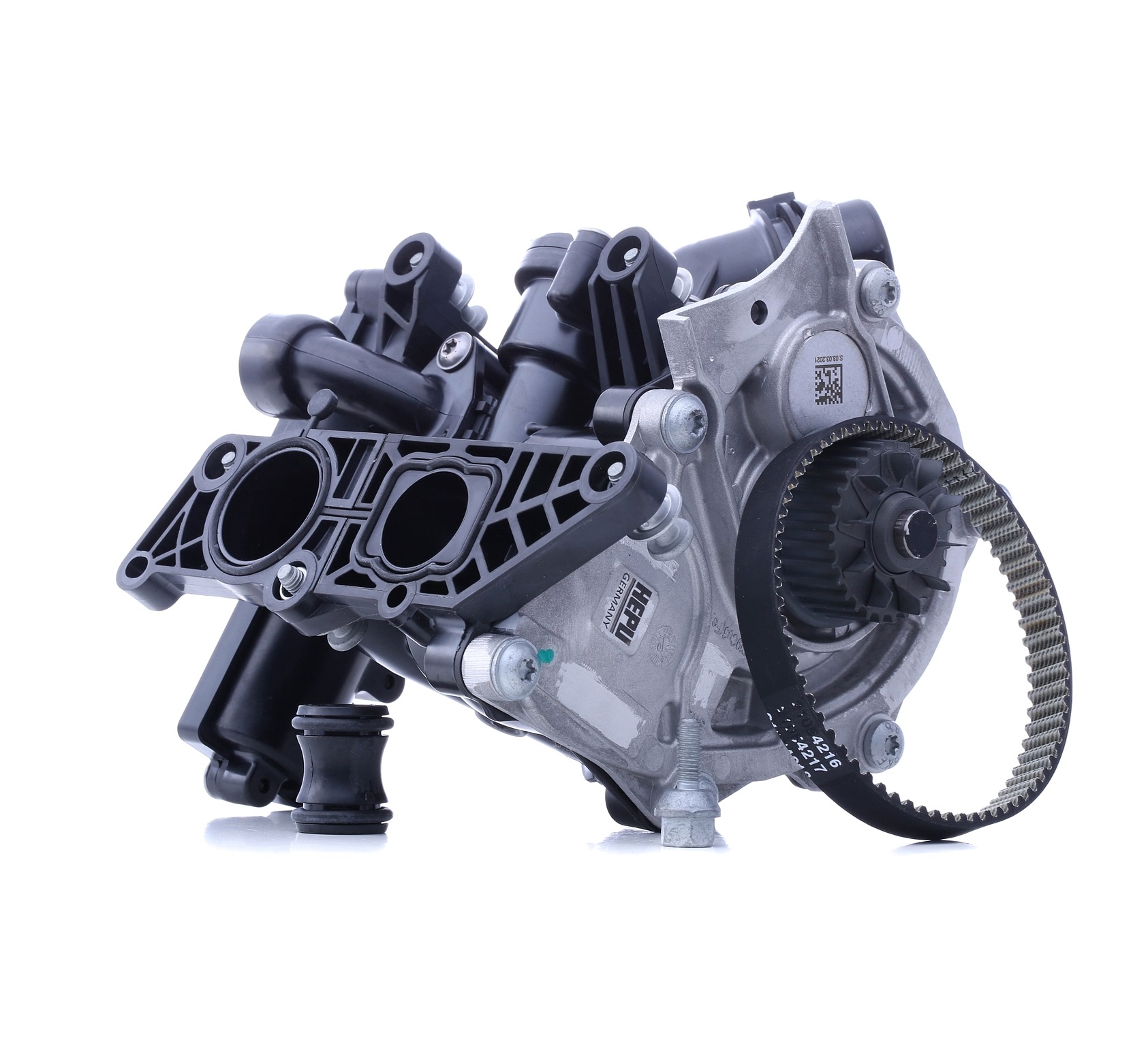 HEPU Water pump
Number of Teeth: 29, with gaskets/seals, with pipe socket, with belt, with screw, with thermal management module, Mechanical
Article number: P673
compared to
RRP
£447.76
£355. 99price incl. 20% VAT, excl. delivery costs
HEPU Water pump
Number of Teeth: 29, with gaskets/seals, with pipe socket, with belt, with screw, with thermal management module, Mechanical
Article number: P673
compared to
RRP
£447.76
£355. 99price incl. 20% VAT, excl. delivery costs
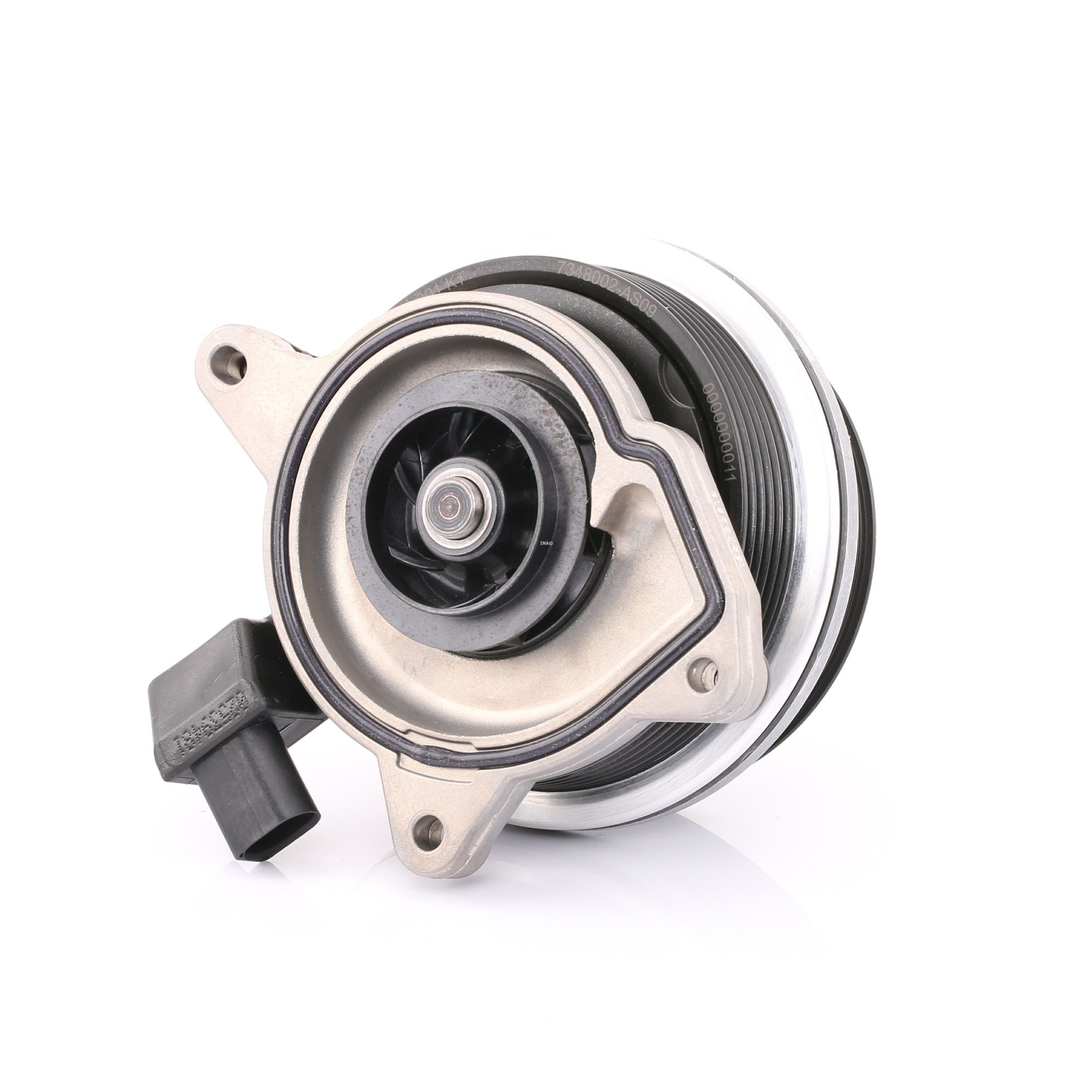 INA Water pump
Electric, for V-ribbed belt use
Article number: 538 0732 10
£167. 99price incl. 20% VAT, excl. delivery costs
-29%
INA Water pump
Electric, for V-ribbed belt use
Article number: 538 0732 10
£167. 99price incl. 20% VAT, excl. delivery costs
-29%
 Article number: 113 220 0035
compared to
RRP
£191.25
£133. 99price incl. 20% VAT, excl. delivery costs
Article number: 113 220 0035
compared to
RRP
£191.25
£133. 99price incl. 20% VAT, excl. delivery costs
 Article number: VKPC 81207
£135. 99price incl. 20% VAT, excl. delivery costs
Article number: VKPC 81207
£135. 99price incl. 20% VAT, excl. delivery costs
Thermostat Housing Replacement:
- Often necessary alongside water pump replacement
- Addresses integrated housing failures in TSI engines
- Uses improved metal housings where available
Auxiliary Water Pump Service:
- Separate component replacement for P261A00 error codes
- Less invasive procedure than main pump replacement
- Relatively inexpensive compared to main pump failure
Proactive Prevention: Your Best Defence
Preventing water pump failure requires consistent maintenance and careful attention to cooling system health. AUTODOC experts suggest implementing these preventative measures:
Regular Maintenance Tasks:
- Check coolant levels weekly and investigate any recurring losses
- Perform cooling system pressure tests annually after 60,000 kilometres
- Replace coolant according to manufacturer specifications using correct G12 or G13 formulations
- Address oil leaks immediately to prevent seal contamination
- Inspect auxiliary water pump operation during routine services
Professional Service Requirements:
- Complete cooling system flush during timing belt services
- Pressure test cooling system before and after major engine work
- Use only OEM or equivalent quality replacement parts
- Ensure proper torque specifications during installation
- Verify all sensors and connections after cooling system work
When sourcing replacement components, particularly thermostat housings for TSI engines, ensure compatibility with your specific engine code to prevent recurring failures.
Early Warning System:
- Monitor coolant consumption patterns
- Listen for unusual noises during engine operation
- Watch for temperature gauge fluctuations
- Address warning lights immediately rather than topping up repeatedly
| Maintenance Item | Frequency | Critical Importance |
| Coolant level check | Weekly | High |
| Cooling system inspection | Every service | High |
| Pressure testing | Annually after 60,000km | Medium |
| Complete coolant flush | Every 5 years or timing belt service | Critical |
Key Takeaways
Water pump failures in VW Polo 6R models represent a widespread issue affecting all engine variants, with TSI petrol engines showing particular vulnerability due to integrated housing designs. Early detection through regular coolant monitoring and prompt professional attention can prevent catastrophic engine damage. While multiple component revisions exist, the fundamental plastic housing design continues to present longevity challenges, making preventative maintenance and early intervention crucial for long-term reliability.

Frequently Asked Questions
How long should a VW Polo 6R water pump last?
While designed for the vehicle's lifetime, most Polo 6R water pumps require replacement between 70,000-100,000 kilometres. Some fail much earlier, particularly in TSI engines where integrated housing designs create additional stress points.
Can I drive with a leaking water pump?
Driving with a leaking water pump risks severe engine damage from overheating. If you notice coolant loss, monitor levels closely and seek professional diagnosis immediately. Continued driving without addressing the leak can result in head gasket failure or complete engine seizure.
Why do Polo 6R water pumps fail more frequently than other models?
The primary issue stems from plastic housing construction that degrades under heat cycling, combined with integrated thermostat housing designs in TSI engines. Oil contamination from engine seepage also accelerates seal failure, creating a cascade of cooling system problems.
What's the difference between main and auxiliary water pump failures?
The main water pump circulates coolant throughout the engine, while the auxiliary pump handles specific circuits like EGR cooling. Main pump failure causes immediate overheating risks, whereas auxiliary pump failure typically triggers warning codes (P261A00) but allows continued driving with reduced efficiency.
Should I replace the timing belt when fixing the water pump?
Yes, if your Polo 6R has a timing belt system, AUTODOC mechanics strongly recommend replacing both components simultaneously. This prevents future labour costs and ensures the timing belt isn't contaminated by coolant leaks, which can cause belt failure and potential engine damage.


