Avatar

Cute is relative

@allstrangenature / allstrangenature.tumblr.com

All nature is strange. All nature is horrifying. All nature is beautiful.

I wanted to get a video of this ghost crab but every time I got close to their hole they scuttled back in, so I tried getting clever with it. I made a little sandcastle and shoved my phone into it, hit record, and walked away. Crab was VERY suspicious of this addition to their environment.

girl you erected a mysterious black monolith that contained all the knowledge your culture had ever collected were you hoping he'd develop rudimentary tool use

I feel like "trump wants to throw away literal dinosaur fossils" would really turn heads if we actually had a functional opposition party in this country to get messages out, but I guess I'll just have to get a paint pen and write it on my car. fine, I'll do it.

Trump and friends are trying to get rid of IMLS (Institute of Museum and Library Science, USA Federal agency). Everyone is on leave/in admin limbo while the DOGE kids do whatever and lock people out of their emails. Already-awarded federal grants (that's how I get paid) for museums and libraries are now being terminated early via executive order. Museums are already closing (to be fair it has been bad for decades) and a lot of large and delicate fossil material will need new homes with space and funding, which almost no one has. It's bad. I don't know what to do except to keep working and occasionally scream into the internet.

Not trying to be a bummer, but this is pretty much the only thing anyone at my job can think about right now. I can only speak for museums, but specimens need periodical tending or they will decay or get lost. Grant funding is how we do everything: it's how temporary workers get paid, how we get access to subscription-based software, and it's how we buy new label paper for cripes' sake. We are still fighting, but everyone is honestly loopy with stress all the time now. People should know what they are destroying.

If you're feeling anxious or depressed about the climate and want to do something to help right now, from your bed, for free...

Start helping with citizen science projects

What's a citizen science project? Basically, it's crowdsourced science. In this case, crowdsourced climate science, that you can help with!

You don't need qualifications or any training besides the slideshow at the start of a project. There are a lot of things that humans can do way better than machines can, even with only minimal training, that are vital to science - especially digitizing records and building searchable databases

Like labeling trees in aerial photos so that scientists have better datasets to use for restoration.

Or counting cells in fossilized plants to track the impacts of climate change.

Or digitizing old atmospheric data to help scientists track the warming effects of El Niño.

Or counting penguins to help scientists better protect them.

Those are all on one of the most prominent citizen science platforms, called Zooniverse, but there are a ton of others, too.

Oh, and btw, you don't have to worry about messing up, because several people see each image. Studies show that if you pool the opinions of however many regular people (different by field), it matches the accuracy rate of a trained scientist in the field.

--

I spent a lot of time doing this when I was really badly injured and housebound, and it was so good for me to be able to HELP and DO SOMETHING, even when I was in too much pain to leave my bed. So if you are chronically ill/disabled/for whatever reason can't participate or volunteer for things in person, I highly highly recommend.

Next time you wish you could do something - anything - to help

Remember that actually, you can. And help with some science.

Yup, these are actually *really* important. And a small bit of work helps, so it’s doable even if you’re snowed under with survival work or in too much pain to concentrate for longer periods.

It’s multiply-checked by more than one person, so don’t worry about fucking it up because your concentration is fucked. Your input is valuable but not the only input.

I find Zooniverse very good, and it does Citizen Historian work too - I spent time digitising concentration camp records because a) families still don’t know what happened to some of their loved ones b) this makes the records available for historians without travelling to archives in person, which I can testify is *invaluable* for disabled historians and helps cut the need for overseas travel to do vital historical work.

It unexpectedly helped me with learning how to decipher premodern handwriting too, which proved really useful in my academic stuff. You *will* pick up valuable skills doing this. Put it on your CV.

Other places you can go to do citizen science, from the notes

(Thanks to everyone who left these in the notes! If you know more, put them in the notes, and I might add them! And ty @enbycrip for the fantastic addition that covered a bunch of details I didn't get to)

Apps/Websites

  • eBird (birds
  • Merlin (birds)
  • citizenscience.gov (big project database, US-based)
  • iNaturalist (nature)
  • MapSwipe (collaboration between several Red Cross organizations and Doctors Without Borders, update vital geospatial data) Smithsonian archives (transcriptions, many subjects)
  • Cornell Bird Lab (birds)
  • FoldIt (folding proteins)
  • Fathomverse (sea animals)
  • Project Monarch (butterflies)

In person

  • Bioblitz (nature) Species watch (species) Audobon Society (birds)

Also:

Even if you don't have time to spend, but do have some processor cycles to spare, check out the projects available at BOINC's Compute for Science: https://boinc.berkeley.edu/

Hey guys, these projects make a HUGE difference for science. For example, I run bplant.org and iNaturalist is the #1 source of images in ID guides and articles and other educational materials I develop. The plant observations are also helpful for assessing plant ranges and how these ranges are changing with climate change. And it also helps me identify local seed sources for use in restoration plantings. Use of iNaturalist, even casual use like a random person uploading pics of plants they see growing in their yard, or a random parking lot they were in, or a random vacant lot, those observations are MAJORLY helping in (1) education (2) science (3) conservation.

This stuff makes a huge difference.

Also, if you want to make the biggest impact on these sites, release any material with the more permissive licenses, like CC-BY. If you add a NC or ND clause, for instance, your photos cannot be included on Wikipedia or bplant or a number of other educational sites, because those license restrictions are incompatible with combining with copyleft material.

But yeah, go do citizen science, please!!!

I thought I'd go back and repost this because there are probably a lot of people out there who, like me, reallllyyyyyy need something to distract them right now

So, hey. You. Stop doomscrolling. Take a deep breathe. And if you want, try doing some citizen science or citizen history instead

I'm also going to especially promote MapSwipe, for those who want to do something tangible to help people now.

From their website:

Data Everywhere

In today's technology-filled world, we have access to vast amounts of information at our fingertips. This includes geospatial data, which helps us understand places and the “where?” of things - a vitally important piece of successful humanitarian programs. It is important for getting from point A to point B as well as for coordination, understanding needs, tracking impact, identifying gaps, and a multitude of other concerns. For responsible use by humanitarians, this information must be assessed, refreshed, and validated as populations, infrastructure, and the surrounding environments experience the inevitable changes that occur as time, conflicts, and disasters unfold... MapSwipe is a free open source mobile application available on iOS and Android that empowers anyone with a smartphone to make a meaningful impact contributing to global mapping efforts. MapSwipe crowdsources the review of satellite imagery to:

There is so much amazing about this. It's an archeological museum in 530 BCE or so. Also, the exhibits are labeled in three languages. Also they apparently had replicas on display for some things, much like modern museums do.

Humanity has not really changed that much, and some of the ways in which we haven't changed are really good.

Y'all, I am BEGGING you to click through and read that short Wikipedia article. It's the earliest museum we've ever discovered. It was part of the state of Ur.

This is the Ur-Museum!

Some of the artifacts in this museum date as far back as the 20th century BCE, which would have been as long ago to Ennigaldi-Nanna as the fall of the western roman empire is for us

If you're feeling anxious or depressed about the climate and want to do something to help right now, from your bed, for free...

Start helping with citizen science projects

What's a citizen science project? Basically, it's crowdsourced science. In this case, crowdsourced climate science, that you can help with!

You don't need qualifications or any training besides the slideshow at the start of a project. There are a lot of things that humans can do way better than machines can, even with only minimal training, that are vital to science - especially digitizing records and building searchable databases

Like labeling trees in aerial photos so that scientists have better datasets to use for restoration.

Or counting cells in fossilized plants to track the impacts of climate change.

Or digitizing old atmospheric data to help scientists track the warming effects of El Niño.

Or counting penguins to help scientists better protect them.

Those are all on one of the most prominent citizen science platforms, called Zooniverse, but there are a ton of others, too.

Oh, and btw, you don't have to worry about messing up, because several people see each image. Studies show that if you pool the opinions of however many regular people (different by field), it matches the accuracy rate of a trained scientist in the field.

--

I spent a lot of time doing this when I was really badly injured and housebound, and it was so good for me to be able to HELP and DO SOMETHING, even when I was in too much pain to leave my bed. So if you are chronically ill/disabled/for whatever reason can't participate or volunteer for things in person, I highly highly recommend.

Next time you wish you could do something - anything - to help

Remember that actually, you can. And help with some science.

Yup, these are actually *really* important. And a small bit of work helps, so it’s doable even if you’re snowed under with survival work or in too much pain to concentrate for longer periods.

It’s multiply-checked by more than one person, so don’t worry about fucking it up because your concentration is fucked. Your input is valuable but not the only input.

I find Zooniverse very good, and it does Citizen Historian work too - I spent time digitising concentration camp records because a) families still don’t know what happened to some of their loved ones b) this makes the records available for historians without travelling to archives in person, which I can testify is *invaluable* for disabled historians and helps cut the need for overseas travel to do vital historical work.

It unexpectedly helped me with learning how to decipher premodern handwriting too, which proved really useful in my academic stuff. You *will* pick up valuable skills doing this. Put it on your CV.

Other places you can go to do citizen science, from the notes

(Thanks to everyone who left these in the notes! If you know more, put them in the notes, and I might add them! And ty @enbycrip for the fantastic addition that covered a bunch of details I didn't get to)

Apps/Websites

  • eBird (birds
  • Merlin (birds)
  • citizenscience.gov (big project database, US-based)
  • iNaturalist (nature)
  • MapSwipe (collaboration between several Red Cross organizations and Doctors Without Borders, update vital geospatial data) Smithsonian archives (transcriptions, many subjects)
  • Cornell Bird Lab (birds)
  • FoldIt (folding proteins)
  • Fathomverse (sea animals)
  • Project Monarch (butterflies)

In person

  • Bioblitz (nature) Species watch (species) Audobon Society (birds)

Also:

Even if you don't have time to spend, but do have some processor cycles to spare, check out the projects available at BOINC's Compute for Science: https://boinc.berkeley.edu/

Hey guys, these projects make a HUGE difference for science. For example, I run bplant.org and iNaturalist is the #1 source of images in ID guides and articles and other educational materials I develop. The plant observations are also helpful for assessing plant ranges and how these ranges are changing with climate change. And it also helps me identify local seed sources for use in restoration plantings. Use of iNaturalist, even casual use like a random person uploading pics of plants they see growing in their yard, or a random parking lot they were in, or a random vacant lot, those observations are MAJORLY helping in (1) education (2) science (3) conservation.

This stuff makes a huge difference.

Also, if you want to make the biggest impact on these sites, release any material with the more permissive licenses, like CC-BY. If you add a NC or ND clause, for instance, your photos cannot be included on Wikipedia or bplant or a number of other educational sites, because those license restrictions are incompatible with combining with copyleft material.

But yeah, go do citizen science, please!!!

I thought I'd go back and repost this because there are probably a lot of people out there who, like me, reallllyyyyyy need something to distract them right now

So, hey. You. Stop doomscrolling. Take a deep breathe. And if you want, try doing some citizen science or citizen history instead

I'm also going to especially promote MapSwipe, for those who want to do something tangible to help people now.

From their website:

Data Everywhere

In today's technology-filled world, we have access to vast amounts of information at our fingertips. This includes geospatial data, which helps us understand places and the “where?” of things - a vitally important piece of successful humanitarian programs. It is important for getting from point A to point B as well as for coordination, understanding needs, tracking impact, identifying gaps, and a multitude of other concerns. For responsible use by humanitarians, this information must be assessed, refreshed, and validated as populations, infrastructure, and the surrounding environments experience the inevitable changes that occur as time, conflicts, and disasters unfold... MapSwipe is a free open source mobile application available on iOS and Android that empowers anyone with a smartphone to make a meaningful impact contributing to global mapping efforts. MapSwipe crowdsources the review of satellite imagery to:

Another citizen science project to look into for those interested in wetlands and amphibians is FrogWatch USA.

It’s a little intensive as it requires you to know and learn the calls of your local frog species and actually go out to conduct the surveys, but it’s important work to track frog populations over time that anyone with a little bit of free time can do.

Also once you know how to do it it’s a nice routine to take a walk out to your chosen site and do your weekly survey. And returning to it year after year really allows you to connect with the changing patterns of frog species and how the weather, climate, and local habitat may affect the presence and absence of different species in your area.

I’m losing my fucking mind there’s a whole god damn online database full of illustrations for illuminated manuscripts, you don’t need a subscription or anything. And it has a search function so you can enter key words for whatever you want to see. Right now I’m looking for fucked up illustrations of the apocalypse in Revelations, like so;

If you click the images on the website they come out super high def too. They also have a couple bestiaries, as well as some illustrations of the Divine Comedy. This is my new best friend I’m so fucking excited

yes. excellent.

I think there must be lots of people who need this?

If you guys dont understand WHY this is so important - corpse flowers bloom every 7-10 years. Once. For one day. And then their bloom dies and they go back to doing their plant thing. These plants are extremely rare, and endangered, obviously their method of mystical breeding is not efficient in times of humans causing mass destruction.

So for them to bloom at the same time BY CHANCE and pollinate each other, the Japanese botanical garden they are in now has 700 chances to make more and assist in saving the species.

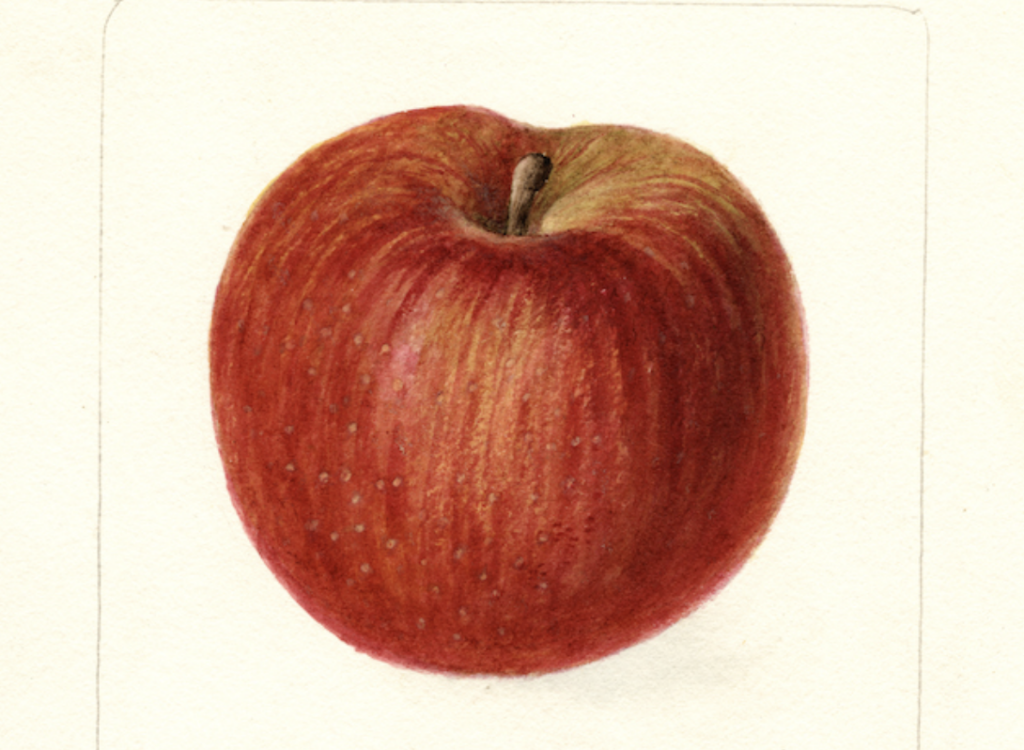
At what point does an exploration of these images tip from information into knowledge? It’s hard to say, but it’s unlikely we would pursue either one if that pursuit didn’t also include its share of pleasure. Enter the USDA’s Pomological Watercolor Collection here to [view] and download over 7,500 high-resolution digital images like those above.

I wonder how many of these fruits & vegetables have changed since 1886?

THIS IS SO COOL, WHAT THE HELL, THANK YOU!

Kinda in love with the idea that different places on other sides of the world can look so similar. Something something universal human experiences

Like. Kyrgyzstan and Switzerland?

Miami and the Gold Coast (in Aus)

New Zealand and Oregon

The great plains and the Russian steppe

India and fiji

Gonna consolidate a couple additions/recommendations from others

Napa Valley, California and Tuscany, Italy

Appalachians in America and the Grampians in Australia

Black sand beach in Iceland and New Zealand

Aurora borealis and australis

Congo and Amazon rainforest/river

desert roads in Australia, South Africa, Argentina, and Mexico

Mountains in France and Korea

every ecosystem is entirely unique! But some rhyme so beautifully

On Wikipedia, I found an article about a bacterium that is the only known organism that exists in an ecosystem containing only itself.

It eats chemicals produced from radioactive decay of rocks deep beneath the Earth's crust.

Nothing on Earth is alone except this little bacterium.

Desulforudis audaxviator??? My favorite microbe??? Found 2.7 km down a South African gold mine in a puddle of radioactive groundwater?

Also fun in microbiology when we talk about wether individuals even exist. If they don’t, this guy could be the only one. BUT even he has evidence of horizontal gene transfer with archaea! Even if you can be alone doesn’t mean you have to be.

The name comes from a quotation from Jules Verne's novel Journey to the Center of the Earth, where the hero, Professor Lidenbrock, finds a secret inscription in Latin: Descende, audax viator, et terrestre centrum attinges (Descend, bold traveller, and you will attain the center of the Earth).

- From the Wikipedia article

How the media depicts the Apollo 11 mission:

Actual quotes from the Apollo 11 mission:

Avatar
otto-woods

also according to michael collins when the three of them were discussing what neil armstrong should say when he first stepped on the moon, collins suggested armstrong say “Oh, my God, what is that thing?”  and then scream and cut out his mic.

Everyone forgets Michael Collins and it’s fucking tragic.

Imagine being the only person alive who can say this

Avatar
zachsanomaiy

buzz aldrin and neil armstrong liked to do a thing where they’d tell unfunny jokes at parties about being on the moon and when people were confused they’d go “guess you had to have been there”

[ID: tweet from Linn LeBlanc reads: Where were you 49 years [ago] today when @/TheRealBuzz and Neil Armstrong made those historic first steps onto the Moon. Attached is a color photo of an astronaut on the moon. Buzz Aldrin quote tweets it and replies: I was on the Moon! #Apollo11 /]

Sponsored

You are using an unsupported browser and things might not work as intended. Please make sure you're using the latest version of Chrome, Firefox, Safari, or Edge.